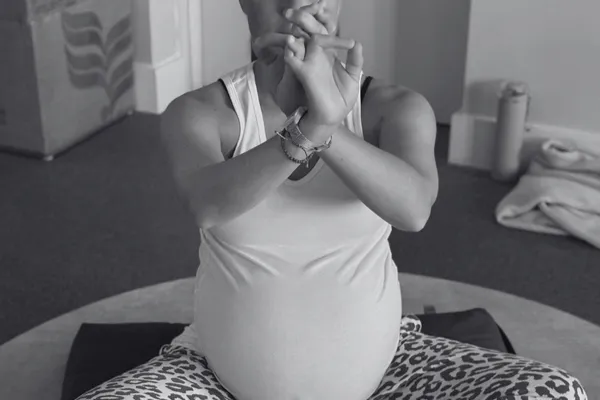
Why Emotional Regulation Matters in Pregnancy
If you're in your second trimester right now, juggling work deadlines with prenatal appointments, researching car seats while managing morning sickness aftershocks, you might feel like you're barely keeping your head above water emotionally.
And if someone suggests you add "mindfulness practice" to your already impossible to-do list? You might want to throw something. But here's what recent research reveals: the emotion regulation skills you're building right now—even imperfectly, even inconsistently—are doing more than helping you cope with pregnancy. They're actively protecting your mental health for months after your baby arrives.
Study Summary
Researchers in Sweden tracked 623 women from their second trimester through one year postpartum, measuring their ability to regulate emotions and screening for depressive symptoms at multiple points throughout their journey.
Women who struggled more with emotion regulation during the second trimester (~ gestational week 16 to 25) showed consistently higher depressive symptoms not just during pregnancy, but extending through the first six months after birth. This held true even after controlling for existing depression symptoms.
Even more compelling is that women who developed postpartum depression later, including those with late-onset symptoms appearing months after birth, already showed emotion regulation difficulties during their second trimester, before any depressive symptoms appeared.
In other words, your emotional regulation capacity in mid-pregnancy serves as a predictor, and potentially a protective factor, for your mental health throughout the entire perinatal period.
What Emotional Regulation Actually Means
Emotional regulation isn't about suppressing feelings, staying positive, or "not being emotional". It's about having strategies to manage the intensity of your emotional experience. It includes skills like:
Recognizing when you're becoming dysregulated before you're completely overwhelmed
Using breathing techniques to create space between stimulus and response
Shifting your attention when rumination takes over
Seeking support before you hit a breaking point
Accepting difficult emotions without being consumed by them
These are learnable, practicable skills. And pregnancy, with its hormonal surges, physical discomfort, identity shifts, and anticipatory anxiety, is both the hardest time to practice them and one of the most important.
What This Looks Like in Practice
I've watched this play out with the women I support as a perinatal coach and doula. The clients who invest time in practices that bring peace, tend to move through labor with more presence and through postpartum challenges with more resilience.
Not because they're “better at birth”. But because they've built a toolkit they can access when everything feels overwhelming.
This might look like:
A breathing practice you use during contractions, and later during night feedings when anxiety spikes
Body scan techniques that help you recognize tension before it becomes chronic pain
Thought awareness exercises that create space between "my baby is crying" and "I'm a terrible mother"
Grounding rituals that anchor you when everything feels chaotic
While the research study described earlier focused on individual emotion regulation capacity, there's an important truth we can't ignore - these skills don't develop in isolation.
Community serves as the container where these skills deepen. When you practice alongside others, hear someone articulate the fear you've been holding, witness others using the same tools—that's when individual capacity strengthens.
Moving with Intention
As we close out 2025 and step into a new year, if you recently had a baby, pregnant or planning to be, consider this an invitation. Not to add another impossible standard to your growing list of to-dos, but to recognize that the small practices you establish now aren't indulgences. They're investments in your future mental health and tools you'll use not just during pregnancy, but throughout the demanding early months of parenthood and beyond.
You don't have to do this perfectly, and you certainly don't have to do it alone.
And if you’re ready to move forward with intention, the Peaceful Parenting Collective brings together strategic preparation, evidence-based education, and mindfulness practices within a supportive community of women navigating this transition. Free, lifetime access is also automatically included with any perinatal offering at Yogamazia. Explore it and more resources at https://programs.yogamazia.com.
Reference
Weinmar, E., Iliadis, S.I., Fransson, E. et al. (2025). Predictive associations between prenatal emotion regulation and perinatal depression symptoms. Nat. Mental Health 3, 1352–1362. https://doi.org/10.1038/s44220-025-00531-2
