What are you modeling at home that your child is carrying into the world?
I was called a racist slur in a professional environment where I was hired to show up, serve, and lead. By young people who knew exactly what they were doing. Who laughed when they were asked to stop. Who kept going. So I left.
I have been here before, racism isn’t new to me.
In my personal life at my own front door, in malls where I shopped, my children being subject to it at school. In the corporate setting where colleagues questioned my authority in ways they never questioned my counterparts.
In all cases, I did everything I was advised to do — report it, document it, escalate it — and watched leadership prioritize everything except ownership and accountability.
But this is not about those systems. Those systems are broken and most of us already know it.
This is an open letter for the parents of children who engage in such bigotry.
You may not know your children are doing this. Or maybe you do and believe that type of behaviour is ‘just kids being kids’. Or you may have never had a direct conversation about race in your home because you did not think you needed to.
Here is what I need you to understand.
Racism is not just a discipline issue. It is a values issue. And values are not taught in a single conversation. They are modeled. Daily. In the small moments your children are watching you more closely than you realize.
When you laugh at a joke that demeans someone's race and then go quiet, they learn that silence is acceptable.
When you dismiss a story about racism as exaggerated or political, they learn that other people's pain is negotiable.
When you never bring it up at all, they learn that it does not concern them.
When you see it happening and say nothing, they learn that your silence is permission.
When they walk into a room with someone who looks like me, they carry all of that with them. Every lesson you taught them and every one you did not.
And for those who know exactly what you are teaching, this letter will not change your mind.
I left that room because I have spent years building a practice and a set of boundaries that I refuse to abandon for anyone. My act of self-preservation. My presence in the fullest sense of the word.
But I should not have had to leave.
The reason I had to leave started long before that moment. It started at home. In a house where a child learned that some people's humanity is optional.
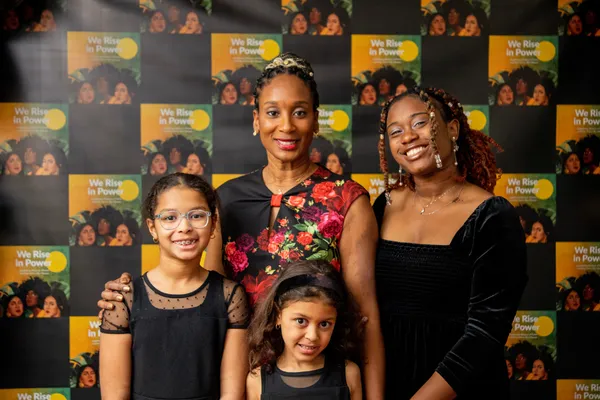
I am a parent too. I have had hard conversations with my daughters about race, about what they may face, about how to protect themselves, about what their worth is regardless of what the world tells them. Those conversations are never comfortable each time we have them, but they are necessary.
If you are not sure where to start, these three practices are ones I use with my own daughters. For those ready to go deeper, Ibram X. Kendi's How to Be an Antiracist is essential reading for any parent committed to doing this work.
Because raising good humans is not about ‘keeping the peace’. It is about preparing your child to be a person of integrity when you are not in the room.
Nelson Mandela said “No one is born hating another person because of the colour of their skin, or their background, or their religion. People must learn to hate, and if they can learn to hate, they can be taught to love, for love comes more naturally to the human heart than its opposite.”
The students in that room were not born knowing how to harm. They learned it. Which means it can be unlearned. But only if you are willing to do the work at home first.
So I am asking you directly. Not with judgment.
What are you modeling at home that your child is carrying into the world?
Dr. Michelle El Khoury is the founder of Yogamazia and creator of The S.M.A.R.T. Journey to Parenting™. She offers yoga, mindfulness, and doula support for women, families and organizations navigating every season of change. Learn more at yogamazia.com
